Learning Outcomes:
i. Define the stomach and explain its role in the digestive process.
ii. Describe the structure of the stomach, including its four main layers, the mucosa, submucosa, muscularis externa, and serosa.
iii. Explain the mechanical breakdown of food in the stomach through churning and grinding actions.
iv. Discuss the chemical digestion of food by gastric juices, including pepsin, hydrochloric acid, and mucus.
v. Analyze the significance of gastric juices in breaking down proteins, initiating fat digestion, and protecting the stomach lining.
i. The Stomach: A Muscular Churning Chamber
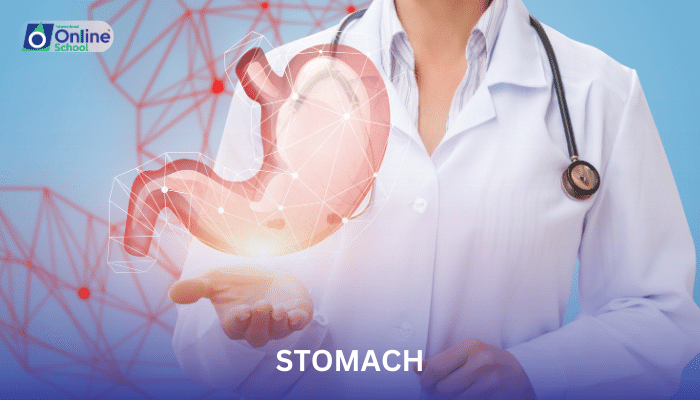
The stomach is a J-shaped muscular sac located in the upper left portion of the abdominal cavity. It serves as a crucial stage in the digestive process, where food undergoes both mechanical and chemical breakdown.
ii. Structure of the Stomach: A Layered Digestive Fortress
The stomach wall is composed of four main layers:
Mucosa: The innermost layer, lined with epithelial cells, secretes gastric juices and provides a protective barrier against harmful substances.
Submucosa: A layer of connective tissue that supports the mucosa and contains blood vessels, nerves, and glands.
Muscularis externa: A thick layer of smooth muscles responsible for churning and grinding food, mixing it with gastric juices.
Serosa: The outermost layer, a thin membrane that covers and protects the stomach and anchors it to surrounding organs.
iii. Mechanical Digestion: Churning and Grinding
Mechanical digestion in the stomach involves churning and grinding actions that physically break down food into smaller particles. The strong muscles of the muscularis externa contract rhythmically, mixing food with gastric juices and increasing its surface area for further digestion.
iv. Chemical Digestion: The Gastric Symphony
Gastric juices, a highly acidic mixture secreted by the mucosal layer, play a central role in chemical digestion:
Pepsin: Pepsin, a protease enzyme, breaks down proteins into smaller peptides.
Hydrochloric acid (HCl): HCl creates a highly acidic environment that activates pepsin and denatures proteins, making them more susceptible to enzymatic breakdown.
Mucus: Mucus, a thick, sticky substance, protects the stomach lining from the acidic gastric juices and prevents self-digestion.
The Significance of Gastric Juices
Gastric juices are essential for efficient digestion:
Protein breakdown: Pepsin initiates the breakdown of proteins, a complex process that continues in the small intestine.
Fat digestion: The acidic environment promotes the emulsification of fats, breaking them down into smaller droplets for further digestion in the small intestine.
Stomach protection: Mucus provides a protective barrier against the acidic environment, preventing damage to the stomach lining.
The stomach is a vital organ in the digestive system, responsible for both mechanical and chemical breakdown of food. The strong muscular contractions churn and grind food, while gastric juices initiate protein digestion, prepare fats for further digestion, and protect the stomach lining from damage. Understanding the structure and function of the stomach provides valuable insights into human physiology and the importance of proper digestion.
